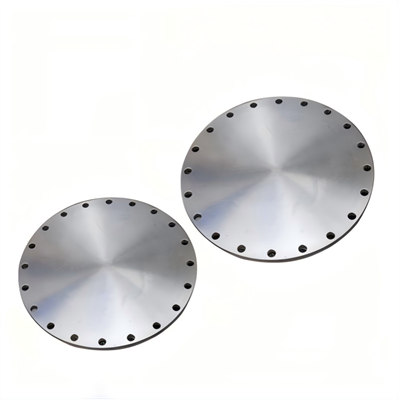
Hey there! As a supplier of Steel Plate Flange, I've been in the game for quite a while, and I often get asked about the industry standards for steel plate flanges. So, I thought I'd jot down this blog to share some insights on what these standards entail and why they're super important.
Understanding Steel Plate Flanges
First off, let's talk a bit about steel plate flanges. They're basically flat discs with holes that are used to connect pipes, valves, pumps, and other equipment to form a piping system. They're crucial components in lots of industries, like oil and gas, chemical, power generation, and more. A good quality plate flange ensures that the connections are secure, leak - proof, and can handle the pressure and temperature conditions of the system.
Key Industry Standards
ASME Standards
The American Society of Mechanical Engineers (ASME) has some of the most widely recognized standards in the world. For steel plate flanges, ASME B16.5 and ASME B16.47 are two of the big ones.
ASME B16.5 covers pipe flanges and flanged fittings from NPS 1/2 through NPS 24 in pressure classes 150, 300, 400, 600, 900, 1500, and 2500. This standard specifies the dimensions, materials, tolerances, and marking requirements for these flanges. For example, it tells you exactly how big the bolt holes should be, what the outer diameter of the flange should measure, and what kind of steel can be used.
ASME B16.47, on the other hand, deals with large diameter steel flanges, from NPS 26 through NPS 60. It has similar requirements as B16.5 but is tailored for the larger sizes. These standards are important because they ensure that flanges from different manufacturers are interchangeable. If you're building a piping system and need to replace a flange, you can be confident that a new flange meeting the same ASME standard will fit right in.
EN Standards
The European Norm (EN) standards are also very significant, especially for projects in Europe and other regions that follow European regulations. EN Weld Neck Flange and EN Slip - on Flange fall under these standards.
EN 1092 - 1 is a comprehensive standard that covers steel flanges. It includes various types of flanges, like weld neck, slip - on, blind, and threaded flanges. This standard defines the design, dimensions, and technical delivery conditions for these flanges. For instance, it has specific requirements for the welding neck of a weld neck flange, which is important for ensuring a strong and reliable connection.
The EN standards also take into account different pressure ratings and materials. They're designed to ensure the safety and performance of the flanges in European piping systems, and they often have different dimensional and material specifications compared to the ASME standards.
ISO Standards
The International Organization for Standardization (ISO) has standards that are designed to be globally applicable. ISO 7005 - 1 is one such standard for steel flanges. It provides guidelines for the dimensions, materials, and mechanical properties of flanges. ISO standards aim to harmonize the requirements across different countries and industries, making it easier for international trade and cooperation.
Why Industry Standards Matter
You might be wondering, "Why all these standards? Can't I just use any old flange that looks okay?" Well, the answer is a big no. Industry standards are in place for several important reasons.
Safety
Safety is the number one priority. Flanges that don't meet the standards might not be able to withstand the pressure and temperature of the system they're installed in. This can lead to leaks, which can be extremely dangerous, especially in industries dealing with hazardous materials. For example, in an oil refinery, a flange leak could cause a fire or an explosion. Standards ensure that the flanges are designed and manufactured to handle the specific conditions they'll be exposed to.
Compatibility
As I mentioned earlier, standards make sure that flanges from different manufacturers are compatible. This means that if you're working on a large project and need to source flanges from multiple suppliers, you don't have to worry about whether they'll fit together properly. It saves time and money on installation and reduces the risk of errors.


Quality Assurance
Standards also act as a quality control mechanism. When a manufacturer produces flanges according to these standards, it's a sign that they're following a set of best practices. This gives you, the customer, more confidence in the product. You can trust that the flanges you're buying have been tested and meet the minimum requirements for quality and performance.
How We Ensure Compliance
As a Steel Plate Flange supplier, we take compliance with industry standards very seriously. We have a team of experts who are well - versed in all the major standards, like ASME, EN, and ISO.
We source our raw materials from reliable suppliers who also adhere to high - quality standards. Our manufacturing process is closely monitored to ensure that every flange we produce meets the exact specifications of the relevant standard. We use advanced testing equipment to check the dimensions, material properties, and pressure - handling capabilities of our flanges.
Before we ship any product, it goes through a final inspection to make sure it's up to the mark. We also provide detailed documentation with each order, including certificates of compliance, material test reports, and dimensional inspection reports. This gives our customers full transparency and peace of mind.
Contact Us for Your Flange Needs
If you're in the market for high - quality steel plate flanges that meet all the industry standards, look no further. We've got the experience, expertise, and commitment to quality to provide you with the best products for your project. Whether you're working on a small plumbing job or a large industrial piping system, we can offer the right solutions for you.
Don't hesitate to reach out to us to discuss your requirements. We're always happy to help and can provide you with detailed quotes and product information. Let's work together to ensure your project is a success!
References
- ASME B16.5 Standard
- ASME B16.47 Standard
- EN 1092 - 1 Standard
- ISO 7005 - 1 Standard