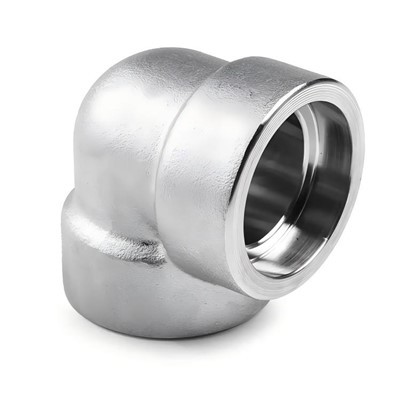
The manufacturing process of a Socket Type Elbow is a fascinating journey that combines precision engineering, high - quality materials, and advanced production techniques. As a supplier of Socket Type Elbows, I am excited to share with you the detailed steps involved in creating these essential pipe fittings.
Material Selection
The first step in the manufacturing process of a Socket Type Elbow is material selection. The choice of material depends on the specific application of the elbow. Common materials used include carbon steel, stainless steel, and alloy steel.
Carbon steel is a popular choice due to its high strength and relatively low cost. It is suitable for general - purpose applications where corrosion resistance is not a major concern. Stainless steel, on the other hand, offers excellent corrosion resistance, making it ideal for applications in industries such as food processing, chemical, and marine. Alloy steel is used when higher strength and better heat resistance are required, often in high - pressure and high - temperature applications.
Forging
Once the material is selected, the forging process begins. Forging is a crucial step as it shapes the raw material into the basic form of the Socket Type Elbow. The forging process involves heating the metal to a specific temperature until it becomes malleable. Then, it is placed in a die and hammered or pressed into the desired shape.
There are two main types of forging methods: open - die forging and closed - die forging. Open - die forging is suitable for producing large - sized elbows with simple shapes. In this method, the metal is placed between two flat dies, and the hammer strikes the metal to deform it. Closed - die forging, on the other hand, is used for more complex shapes. The metal is placed in a die cavity that has the exact shape of the desired elbow, and the pressure is applied to fill the cavity.
Machining
After forging, the Socket Type Elbow undergoes machining to achieve the required dimensions and surface finish. Machining operations include turning, milling, drilling, and threading.
Turning is used to create the outer diameter of the elbow and to remove any excess material. Milling is employed to create flat surfaces and to cut the socket end of the elbow. Drilling is used to create holes for bolts or other fasteners if required. Threading is done to create internal or external threads for connection purposes.
During the machining process, strict quality control measures are in place to ensure that the dimensions of the elbow meet the required standards. Precision measuring tools such as calipers, micrometers, and gauges are used to check the dimensions at various stages of the machining process.
Heat Treatment
Heat treatment is an important step in the manufacturing process of a Socket Type Elbow. It is used to improve the mechanical properties of the elbow, such as hardness, strength, and toughness.
There are several types of heat treatment processes, including annealing, quenching, and tempering. Annealing is a process of heating the elbow to a specific temperature and then slowly cooling it. This process relieves internal stresses and improves the ductility of the metal. Quenching involves heating the elbow to a high temperature and then rapidly cooling it in a quenching medium such as water or oil. This process increases the hardness of the metal. Tempering is done after quenching to reduce the brittleness and improve the toughness of the metal.
Surface Treatment
Surface treatment is carried out to protect the Socket Type Elbow from corrosion and to improve its appearance. Common surface treatment methods include galvanizing, painting, and powder coating.
Galvanizing involves coating the elbow with a layer of zinc to prevent corrosion. This is a widely used method for carbon steel elbows. Painting is another option, where a layer of paint is applied to the surface of the elbow. The paint can be chosen based on the specific requirements of the application, such as resistance to chemicals or UV rays. Powder coating is a more advanced surface treatment method, where a dry powder is electrostatically applied to the surface of the elbow and then cured in an oven. This method provides a durable and attractive finish.
Quality Inspection
Before the Socket Type Elbow is ready for shipment, it undergoes a comprehensive quality inspection. This inspection includes visual inspection, dimensional inspection, and non - destructive testing.
Visual inspection is used to check for any surface defects such as cracks, porosity, or unevenness. Dimensional inspection ensures that the elbow meets the specified dimensions. Non - destructive testing methods such as ultrasonic testing, magnetic particle testing, and radiographic testing are used to detect internal defects such as cracks or voids.
Packaging and Shipment
Once the Socket Type Elbow passes the quality inspection, it is carefully packaged to prevent damage during transportation. The packaging materials are chosen based on the size and weight of the elbow. For small elbows, they may be packed in cardboard boxes, while larger elbows may be packed in wooden crates.
The elbows are then shipped to the customers. As a supplier, we ensure that the shipment is timely and that the elbows reach the customers in good condition.
Related Products
If you are also interested in other pipe fittings, we also offer Butt Weld Outlet and Socket Tee. These products are also manufactured with the same high - quality standards and undergo similar manufacturing processes.
If you are in need of Socket Type Elbow or any of our other products, please feel free to contact us for a detailed discussion on your requirements. We are committed to providing high - quality products and excellent customer service.


References
- ASME B16.11: Forged Fittings, Socket - Welding and Threaded
- ASTM A105: Standard Specification for Carbon Steel Forgings for Piping Applications
- ASTM A350: Standard Specification for Carbon and Low - Alloy Steel Forgings for Low - Temperature Service