


What is the radiation resistance of BS Weld Neck Flange?
As a supplier of BS Weld Neck Flanges, I often encounter inquiries from customers about various properties of these flanges, and one question that comes up quite frequently is about their radiation resistance. In this blog, I will delve into the concept of radiation resistance in the context of BS Weld Neck Flanges, exploring what it means, how it is relevant, and the factors that influence it.
Understanding Radiation Resistance
Radiation resistance, in the context of materials and components like BS Weld Neck Flanges, refers to the ability of the flange to withstand the effects of radiation. Radiation can come in various forms, such as electromagnetic radiation (e.g., gamma rays, X - rays) and particle radiation (e.g., neutrons, protons). When a flange is exposed to radiation, it can cause changes in the material's properties, including its mechanical strength, corrosion resistance, and dimensional stability.
For example, high - energy radiation can cause ionization in the material, which may lead to the formation of free radicals. These free radicals can react with the material's atoms and molecules, causing damage to the crystal structure of the metal. Over time, this can result in embrittlement, cracking, and a reduction in the overall performance of the flange.
Importance of Radiation Resistance in BS Weld Neck Flanges
BS Weld Neck Flanges are widely used in industries where radiation exposure is a concern, such as nuclear power plants, medical facilities, and research laboratories. In nuclear power plants, for instance, these flanges are used in piping systems that carry radioactive materials. The radiation resistance of the flanges is crucial to ensure the safety and reliability of the entire system.
If a flange fails due to radiation - induced damage, it can lead to leaks of radioactive substances, which can have serious consequences for the environment and human health. Therefore, understanding and ensuring the radiation resistance of BS Weld Neck Flanges is of utmost importance in these high - risk applications.
Factors Affecting the Radiation Resistance of BS Weld Neck Flanges
- Material Composition
The material used to manufacture the BS Weld Neck Flange plays a significant role in its radiation resistance. Different metals and alloys have different responses to radiation. For example, stainless steel is often used in applications where radiation resistance is required because it has good corrosion resistance and can withstand a certain level of radiation exposure. The presence of elements such as chromium, nickel, and molybdenum in stainless steel can enhance its radiation resistance by forming a protective oxide layer on the surface. - Microstructure
The microstructure of the flange material also affects its radiation resistance. A fine - grained microstructure is generally more resistant to radiation damage than a coarse - grained one. This is because fine - grained materials have more grain boundaries, which can act as barriers to the movement of radiation - induced defects. Heat treatment processes can be used to control the microstructure of the flange material and improve its radiation resistance. - Thickness and Geometry
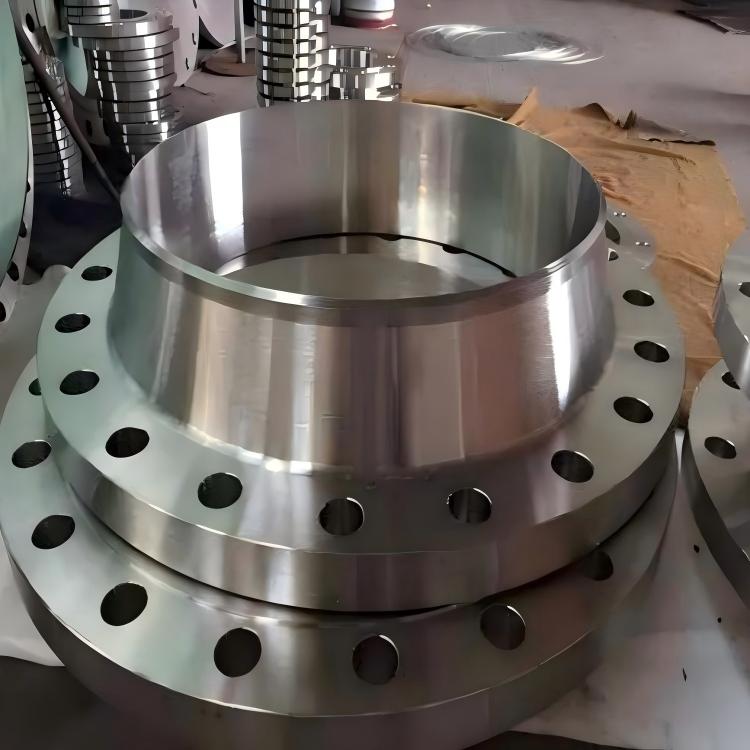
The thickness and geometry of the BS Weld Neck Flange can influence its radiation resistance. A thicker flange can provide more shielding against radiation, reducing the amount of radiation that reaches the inner parts of the flange. Additionally, the shape of the flange can affect the distribution of radiation within the material. For example, a flange with a more complex geometry may have areas where radiation is concentrated, leading to increased damage.
Testing and Evaluation of Radiation Resistance
To ensure the radiation resistance of BS Weld Neck Flanges, various testing methods are used. One common method is the use of radiation exposure tests, where the flanges are exposed to a controlled amount of radiation in a laboratory setting. After the exposure, the flanges are examined for changes in their mechanical properties, such as hardness, tensile strength, and ductility.

Non - destructive testing techniques, such as ultrasonic testing and radiographic testing, can also be used to detect any internal damage caused by radiation. These techniques can help identify cracks, voids, and other defects in the flange material without causing any damage to the flange itself.
Applications of BS Weld Neck Flanges with Good Radiation Resistance
- Nuclear Power Plants
In nuclear power plants, BS Weld Neck Flanges with high radiation resistance are used in primary and secondary coolant systems. These flanges connect pipes that carry radioactive coolant, and their radiation resistance is essential to prevent leaks and ensure the safe operation of the plant. - Medical Facilities
In medical facilities, such as hospitals and clinics, BS Weld Neck Flanges are used in equipment that uses radiation, such as X - ray machines and linear accelerators. The flanges need to be able to withstand the radiation generated by these devices to ensure the long - term reliability of the equipment. - Research Laboratories
Research laboratories that conduct experiments involving radiation also use BS Weld Neck Flanges. These flanges are used in piping systems that carry radioactive materials or in equipment that is exposed to radiation during experiments.
Conclusion
The radiation resistance of BS Weld Neck Flanges is a critical property, especially in industries where radiation exposure is a concern. By understanding the factors that affect radiation resistance, such as material composition, microstructure, and geometry, and by using appropriate testing methods, we can ensure that the flanges meet the required standards for radiation resistance.
If you are in need of high - quality BS Weld Neck Flanges with excellent radiation resistance, we are here to help. Our company has extensive experience in manufacturing and supplying BS Weld Neck Flanges, and we can provide you with the right products for your specific applications. You can also explore our BS Plate Flange and BS Weld Neck Flange product lines to find the most suitable flanges for your needs. Feel free to contact us for more information and to discuss your procurement requirements.
References
- ASME Boiler and Pressure Vessel Code, Section III, Division 1, Subsection NB - 2300: Requirements for Class 1 Components
- ASTM Standards for Flanges and Fittings
- Nuclear Regulatory Commission (NRC) regulations on radiation protection in nuclear power plants


